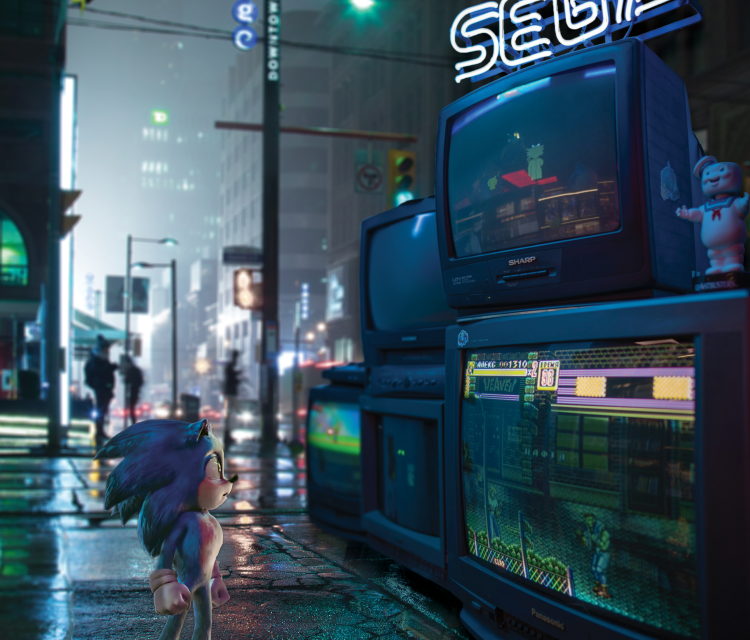
In 1999, when Sega’s last ever console hit store shelves, the industry was full of promises about “next generation” visuals, online capabilities, and cinematic gaming experiences. The Sega Dreamcast didn’t just make these promises, it actually delivered. And though its lifespan was undeniably short, only made and sold for 2.5 years, the Dreamcast’s impact on the gaming industry remains indisputable.
Launched on 9/9/99, Sega didn’t roll out a slow drip of incomplete games, like is so common nowadays, instead they released a deluge. Titles still known to this day like Soul Caliber, NFL 2k (long before EA held exclusive rights to NFL video games), and of course, Sonic Adventure. At a time when competing game and console creators were still dragging their feet, Sega Dreamcast offered a full library of game options upon release. It felt like the future had arrived overnight. And the future, it surely was.
Sonic Adventure, the first 3D Sonic game, introduced us to multiple playable characters, updated character designs, and stronger storytelling. But, more importantly, it introduced us to the Chao Garden: a virtual pet simulator tucked neatly into an action game. And thanks to the Visual Memory Unit (VMU), the Dreamcast’s revolutionary memory card with its own screen, you could even take your Chao with you like your very own Dreamcast-based tamagotchi pet. Pull the VMU out of the controller and suddenly it became a self-sufficient handheld system, complete with minigames and the ability to train your Chao on the go. But nothing summed up Sega’s fearless innovation with the Dreamcast like Phantasy Star Online.
Released in 2000, it was a revelation; the very first home console MMORPG (massive multiplayer online role-playing game). All you needed was a Dreamcast, a dial-up modem, and a phone line you hoped your parents wouldn’t need for the next few hours. You could log in, meet with strangers around the world, and embark on adventures together exploring the uncharted planet, Ragol. You could even purchase the Sega Dreamcast Keyboard accessory to make chatting with your new friends easier than ever. Disconnections and lag couldn’t ruin the magic, Phantasy Star Online opened up a whole new world of online gaming to console players. Beyond its most famous blockbusters, the Dreamcast also became a playground for the weird and wonderful.
____________________________________________________________________________________________________________
Though its time on the market may have been brief, the Dreamcast’s legacy continues to garner the interest from players, collectors, and historians alike.
____________________________________________________________________________________________________________
Long before the days of searching for strange and obscure indie games on Steam, you could find some strange gems on Dreamcast. Games like Seaman, years ahead of Nintendo’s Nintendogs, was a virtual pet video game in which players raised fish-like creatures and could converse with them through use of a microphone accessory. Tokyo Bus Guide was providing gamers with seemingly menial simulator experiences, way before they became a trend on Steam. And, of course, the Cha-Cha Amigo rhythm game that had dedicated maraca controllers, giving gamers motion control before the Wii was even an idea of a concept in some Nintendo executive’s mind. The keyboard, microphone, and maracas have already been mentioned, but we can’t forget about all the other newfangled Dreamcast accessories that existed. There was the fishing rod controller for Sega Bass Fishing that also had an early version of motion control.
The Densha de Go! train simulator, that had a realistic train controller accessory. The jump pack (rumble pack) that added forced feedback, causing the controller to vibrate in response to certain actions (this was before it was a common feature built into controllers like modern systems). The Dreameye was Sega’s attempt at a webcam-style accessory, working as a cam for video calls at a resolution of 320×240. And, of course, the Dreamcast Arcade sticks, which were joysticks designed specifically for arcade-style games. Despite its brilliance though, Sega couldn’t outrun its downfall. The Dreamcast may have been Sega’s last and best console, but it was always at the mercy of the company’s situation. Financial losses, previous console failures, and intense competition led not only to the discontinuation of the Dreamcast, but also to Sega discontinuing console manufacturing altogether. Shifting, instead, to become a third-party developer and publisher.
In the end, the Dreamcast remains one of the most intriguing and influential consoles ever released. The library remains endlessly playable, with games like Sonic Adventure 2 being available right now on Steam. It innovated online play, dual screen consoles, motion-control gaming, and helped give a direction to modern consoles. Though its time on the market may have been brief, the Dreamcast’s legacy continues to garner the interest from players, collectors, and historians alike. Whether you see it as a hidden gem, a bold last attempt by Sega, or just an interesting facet of gaming history; the Dreamcast’s impact is still being felt decades later.