by Justin Jun, staff writer
The first televised presidential debate occurred on September 26, 1960, between John F Kennedy and Richard Nixon. By 1960, 88% of American households had a television and 74 million people had tuned in by some
estimates (Webley, 2010) to watch. Perhaps you’ve heard the story that those who listened to the debate on the radio (the minority) had thought that Nixon had won the debate, whereas those who watched the debate had
thought Kennedy had won. At the time, Nixon was pale and severely underweight from a recent hospitalization and appeared, to some, as “ghoulish.” From that point on it became crucially important how candidates
looked, from how they dressed to their mannerisms.
Today, with widespread access to the internet, it’s easier than ever to stay up-to-date on important issues such as prop LL and MM in Colorado. While each has their own idiosyncrasies, the gist of both props together was
for the state to afford all school children, regardless of their family’s income bracket, free breakfast and lunch. Anyone with access to the internet could watch the results roll in, in real time. Where every step from casting a ballot (by mail or at a drop‐box) to counting and reporting results is increasingly transparent, voters and journalists alike can follow the unfolding story of democracy as it happens.
This election, like those before it since the widespread adoption of the internet, illustrated how modern reporting platforms support this shift. The Colorado Secretary of State provides precinct-level results and downloadable
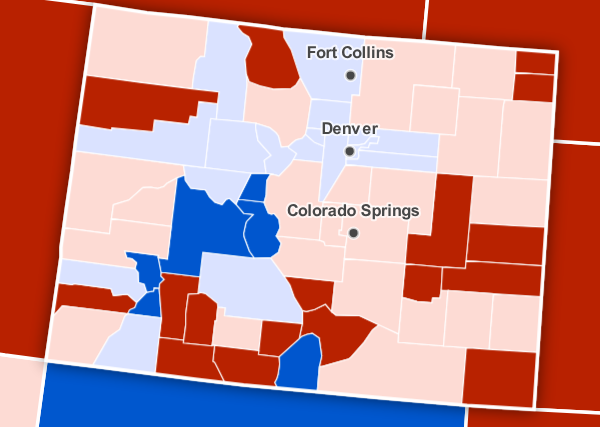
data sets that update as counties report. Sites like npr.org and The Associated Press churn out these results in as close to real time as possible. Rather than waiting for the results to be announced at midnight, residents
are able to see the votes roll in, real time shifts in demographics, and how geographic patterns emerge. Like a visual depiction of political leanings throughout the state growing like mold in a petri dish.
For journalism students and active citizens, watching the results come in live reveals just how fluid elections can really be. Late ballots roll in, the story changes by the hour, and the election night “results” with a solid lead
at 8p.m. might just vanish come midnight.
Voters watching the results in real time feel like they’re part of the process. Not just after they vote, but as the results cascade in and the deluge of ballots are counted the people’s decision begins to emerge from
the pool of uncertainty. Not to say that uncertainty doesn’t still linger, but the ability to watch and interpret the data as it comes can help voters understand the rhythm of the results rather than only the endpoint.
In my mind, watching the election results flicker to life on my screen is like watching democracy breathe. Each update can be heard as a heartbeat, each county’s report a pulse of collective will. Behind every percentage point
is a voice and a hope and stories behind the reasoning they had to vote for the way they did. Those real-time results we have the privilege of watching are a reminder that democracy isn’t a single event, but the unfolding
narrative of this country and the stories we weave together, for better or for worse.
Webley, K. (2010, September 23). How the Nixon-Kennedy Debate Changed the World. TIME; nextgen.
https://time.com/archive/6916633/how-the-nixon-kennedy-debate- changed-the-world/